
Commercial Roofing Solutions That Handle Ponding
Flat Roofing in Pollock Pines for commercial buildings, low-slope residential sections, and drainage challenges
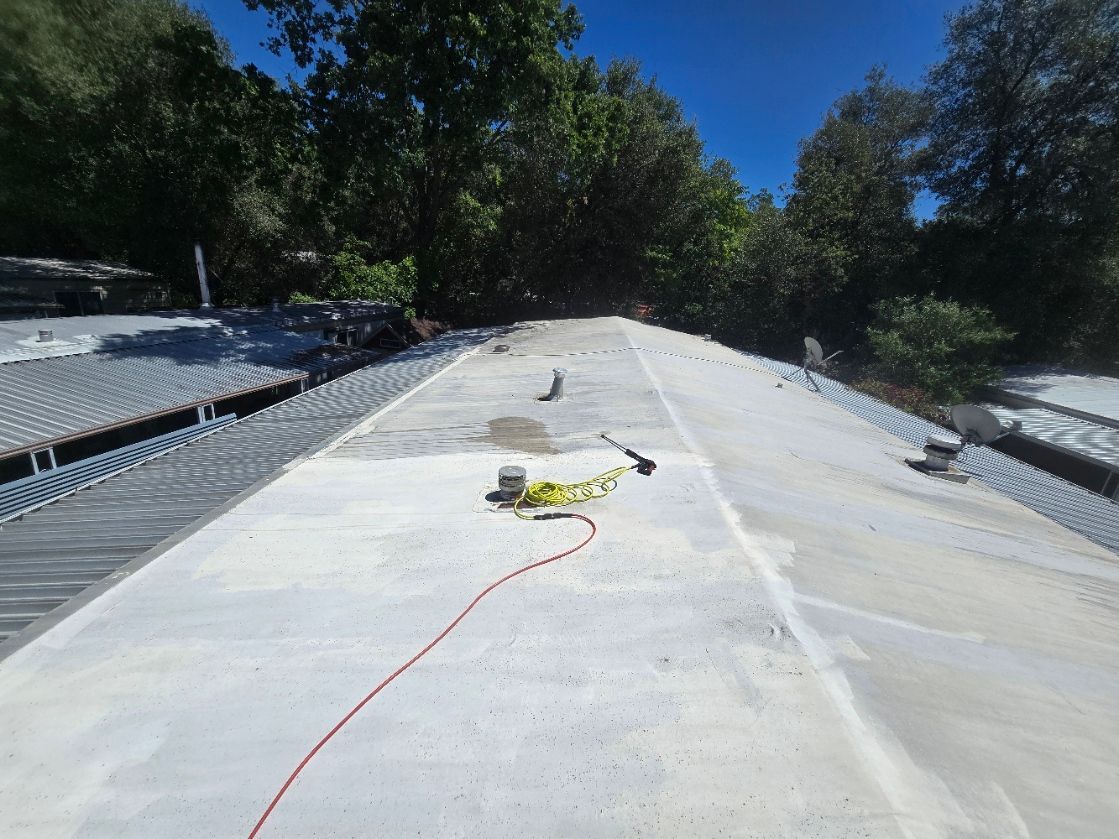
Flat and low-slope roofs require membrane systems designed to handle standing water and thermal movement, unlike steep-slope shingle roofs that rely on gravity for drainage. TPO and EPDM membranes dominate commercial flat roofing due to their durability, UV resistance, and proven performance in temperature extremes—both systems create a continuous waterproof layer without the lapped seams that define shingle installation. Modified bitumen offers a third option with self-adhering or torch-applied installation suited to smaller flat areas on residential properties. Eernisser Roofing installs these systems on commercial buildings and mixed-use structures in Pollock Pines, with particular attention to drainage design that prevents ponding in areas where snow melt or rain accumulates.
Installation starts with inspecting and repairing the roof deck, followed by insulation boards that improve energy performance and create slope toward drains, then the membrane itself, which is mechanically fastened, fully adhered, or ballasted depending on building height and wind exposure. Seams are heat-welded in TPO systems or adhesive-bonded in EPDM, creating watertight joints stronger than the membrane itself. Flashing around parapet walls, HVAC units, and roof penetrations is integrated into the membrane rather than applied as separate pieces.
Schedule an on-site assessment to evaluate current flat roof condition, identify drainage deficiencies, and review membrane options.
What Flat Roof Systems Prevent
Proper flat roofing eliminates the interior leaks that plague poorly maintained commercial buildings, particularly around HVAC equipment and roof drains where flashing failures are common. TPO membranes resist punctures from foot traffic during maintenance and reflect solar heat to reduce cooling loads—a white TPO roof can lower surface temperatures by 50 degrees compared to black EPDM, though EPDM's flexibility makes it more forgiving during installation in cold weather. Modified bitumen systems self-seal around fastener penetrations and conform to irregular deck surfaces better than single-ply membranes.
After installation, water flows to drains and scuppers without pooling in low spots, HVAC techs can access rooftop equipment without damaging the membrane, and your building interior stays dry even during multi-day rain events. Roof drainage improvements—adding drains, tapering insulation to create slope, or installing overflow scuppers—solve the ponding issues that shorten membrane life and cause leaks at seams. You'll notice that ceiling tiles no longer show water stains and that insulation remains dry and effective.
Flat roof repairs often involve patching small punctures or re-sealing seams before widespread failure occurs, which is far less expensive than membrane replacement. Regular inspections catch these issues early—most flat roof failures begin at flashings and penetrations where movement or UV exposure degrades sealants, not in the field of the membrane itself.
What Commercial Property Owners Ask About Flat Roofing
Flat roofing presents different challenges and material choices than residential sloped roofs, and understanding these helps you maintain your building effectively.
What causes ponding on flat roofs?
Ponding results from inadequate slope toward drains, settling or sagging roof decks, or undersized drainage systems that can't handle peak water flow—proper flat roof design includes minimum slope and sufficient drain capacity for expected rainfall.
How long do TPO and EPDM membranes last?
TPO and EPDM systems typically last 20 to 30 years when properly installed and maintained, with lifespan affected by UV exposure, foot traffic, and whether ponding water is present for extended periods.
Can flat roofs be repaired or do they need full replacement?
Many flat roof issues are repairable—small punctures, seam separations, and flashing failures can be patched or re-sealed if caught early, while full replacement becomes necessary when the membrane is brittle, shrinking, or leaking in multiple areas.
What's included in flat roof drainage improvements?
Drainage improvements may involve adding roof drains in low spots, installing tapered insulation to create positive slope toward existing drains, or adding overflow scuppers that prevent water backup if primary drains clog during heavy storms common in Pollock Pines winters.
Why do flat roofs leak around HVAC units?
HVAC equipment creates roof penetrations that require curb flashing integrated into the membrane—leaks occur when flashing separates due to vibration, thermal movement, or improper installation that relied on sealant instead of mechanical attachment.
Eernisser Roofing provides flat roofing services for both new construction and replacement projects, with membrane selection based on your building use, budget, and maintenance capabilities. Contact us to review your flat roof system and address any drainage or leak issues before they affect your building interior.